
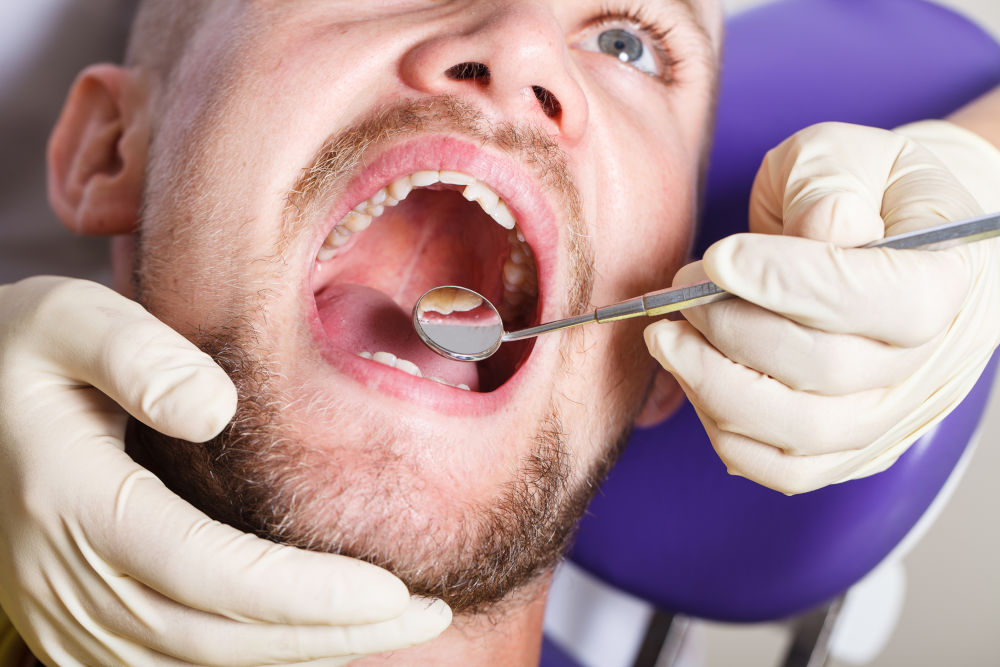


A canker sore is usually painful, small, and short-lived. It tends to heal within one to two weeks.
Oral cancer may also begin as a sore or ulcer, but it often behaves differently. It may not heal. It may feel firm. It may bleed, change color, appear as a red or white patch, or show up with numbness, trouble swallowing, a lump in the neck, or loose teeth.
Most mouth sores are not cancer. But a sore that stays longer than two weeks should be examined by a dentist. That is the simplest and safest rule.
Key Takeaways
- Most canker sores are harmless ulcers that heal within 7 to 14 days, while oral cancer lesions often persist longer and may not improve on their own.
- A sore that remains for more than two weeks should be examined by a dentist, even if it is painless.
- Oral cancer can appear as a non-healing ulcer, red patch, white patch, lump, thickened tissue, or an area that bleeds without a clear cause.
- Pain is not a reliable way to distinguish a canker sore from oral cancer because some early oral cancers cause little or no discomfort.
- Risk factors for oral cancer include tobacco use, heavy alcohol consumption, HPV-related infections, increasing age, significant sun exposure, and a history of cancer.
- Dentists evaluate suspicious mouth sores through a clinical examination and may recommend monitoring, imaging, or a biopsy when necessary.
- Regular oral cancer screenings and prompt evaluation of persistent mouth sores can help detect oral cancer at an earlier and more treatable stage.
Canker Sore or Oral Cancer? Here’s the Quick Difference
People usually notice a mouth sore at the worst possible moment: while brushing, eating something acidic, or running the tongue over a spot that suddenly hurts. The first thought is often, “Did I bite myself?” The second one, especially after a quick internet search, may be much scarier.
So let’s separate the common from the concerning.
A canker sore is usually a small ulcer inside the mouth. It can hurt a lot, even when it is tiny. It may have a white, gray, or yellowish center with a red edge. Most canker sores improve within a few days and heal within 7 to 14 days.
Oral cancer does not always look dramatic in the beginning. Sometimes it looks like a sore that refuses to heal. Sometimes it is a red patch, a white patch, a thick area, or a lump. Sometimes it hurts. Sometimes it does not.
That is why the canker sore vs cancer question should not be answered by appearance alone. The timeline matters. So does the way the tissue feels and whether other symptoms are present.
| Feature | More Typical of a Canker Sore | More Concerning for Oral Cancer |
|---|---|---|
| Pain | Often stings or burns | May be painful or painless |
| Healing | Usually 1–2 weeks | Lasts longer than 2 weeks |
| Look | Round or oval ulcer with pale center | Ulcer, red patch, white patch, lump, thick tissue |
| Feel | Tender but soft | Firm, rough, raised, or fixed |
| Usual spots | Inside lips, cheeks, under tongue | Tongue, floor of mouth, gums, lips, cheeks, palate |
| What to do | Watch healing, reduce irritation | Dental exam, possible screening or biopsy |
The most useful patient rule is this: if a mouth sore is not clearly healing after two weeks, it should be checked.
What Is a Canker Sore?
A canker sore is a shallow ulcer that forms inside the mouth. Dentists may call it an aphthous ulcer. It is not contagious. It is also not the same thing as a cold sore.
Cold sores usually appear on or around the lip and are related to a virus. Canker sores appear inside the mouth, usually on softer tissue.
Common places include the inside of the lips, inner cheeks, under the tongue, soft palate, and sometimes the gums. They can make eating annoying. Orange juice, tomato sauce, vinegar, spicy food, or salty snacks may make the spot sting immediately.
Canker sores can happen for several reasons. Sometimes the trigger is obvious. A person bites the cheek, scrapes the tissue with a sharp chip, brushes too hard, or gets irritation after dental work. Other times it is less clear. Stress, immune reactions, hormonal changes, acidic foods, and nutritional deficiencies may all play a role.
A typical canker sore has a pattern. It appears, hurts for several days, then gradually calms down. It gets smaller. The center fills in. Food becomes easier to tolerate. Then it disappears.
That healing pattern is one of the biggest differences in the canker sore vs mouth cancer discussion. A painful sore is not automatically a dangerous one. But a sore that does not heal normally needs attention.
| Typical Canker Sore Clue | What It Usually Means |
|---|---|
| Small and round | Common ulcer pattern |
| Painful when touched by food | Typical irritation response |
| Soft surrounding tissue | Less concerning than hard tissue |
| Starts improving within days | Good sign |
| Gone within 1–2 weeks | Usual healing timeline |
If you get frequent canker sores, mention it at your dental visit. Recurrent ulcers may be related to irritation, diet, stress, immune issues, or other health factors.
What Is Oral Cancer?
Oral cancer is cancer that develops in the tissues of the mouth. It may affect the tongue, floor of the mouth, gums, lips, inner cheeks, roof of the mouth, or the area behind the back teeth.
Most oral cancers begin in the thin cells lining the mouth. These are called squamous cells. Early oral cancer may be easy to miss because it does not always cause severe pain.
That is the part many patients do not expect. A mouth cancer mouth ulcer may be painless at first. A person may think it is from a sharp tooth, a denture, a burn, or a cheek bite. Sometimes that is true. Sometimes the tissue needs a closer look.
Oral cancer can appear in several ways:
| Area | Possible Sign |
|---|---|
| Tongue | Sore, patch, lump, thick area, bleeding spot |
| Floor of mouth | Firm area or ulcer under the tongue |
| Lip | Crusted sore, non-healing crack, bleeding patch |
| Gums | Swelling, red or white patch, loose tooth, bleeding |
| Inner cheek | Rough patch, ulcer, raised tissue |
| Roof of mouth | Persistent sore or color change |
Early detection matters because oral cancer is usually easier to treat when found earlier. That is one reason dental checkups include soft tissue evaluation, not just teeth cleaning.
During a routine exam, a dentist can look at areas patients may not see well at home: under the tongue, behind the molars, along the sides of the tongue, and the floor of the mouth. These areas matter when evaluating oral cancer vs canker sore concerns.
A suspicious oral cancer sore cannot be diagnosed by a mirror check. If the area does not heal, a dentist may recommend monitoring, referral, imaging, or biopsy depending on what is found.
Canker Sore vs Oral Cancer: Key Differences
The difference between mouth ulcer and cancer is not always obvious in the first few days. A new sore can look ordinary before its behavior becomes clearer.
That is why dentists care about more than the photo. They want to know when it started, whether it is changing, whether it is painful, whether it bleeds, whether the tissue feels hard, and whether the same spot keeps coming back.
Appearance
A canker sore often looks neat, for lack of a better word. It is usually round or oval, shallow, and pale in the center. The border may be red because the tissue is irritated.
Oral cancer can look more irregular. It may appear as an ulcer with uneven edges, a red patch, a white patch, a mixed red-and-white area, or a raised spot. Some oral cancer sores look rough rather than open. Others look like a thickened area that does not belong there.
A mouth ulcer vs cancer comparison becomes more concerning when the lesion looks irregular, has mixed colors, or is surrounded by firm tissue.
Pain Levels
Canker sores usually hurt. Not a little. A very small one can make eating or speaking uncomfortable.
Oral cancer may hurt too, especially later. But early oral cancer sores may be painless. This is why pain is not a safe screening tool. A painless sore that stays for weeks should still be checked.
Healing Time
This is the main difference patients can track.
A canker sore should begin improving within several days and usually heals within one to two weeks. It may still be annoying during that time, but it should be moving in the right direction.
A mouth cancer sore tends to persist. It may stay the same, get larger, bleed, harden, or keep reopening. Any sore that lasts longer than two weeks belongs in a dental chair, not in another round of internet searching.
Bleeding
A canker sore may bleed if it is scratched, bitten, or brushed too aggressively.
Bleeding without a clear reason is different. If a sore bleeds easily, keeps reopening, or appears with a lump or firm area, that is more concerning.
Texture
Texture matters more than many people realize.
A canker sore is usually soft and shallow. A cancerous mouth ulcer may feel firmer. The area around it may feel thick, raised, rough, or attached to deeper tissue. Dentists often gently feel suspicious areas during an oral cancer screening for this reason.
Changes Over Time
A normal ulcer improves.
A suspicious lesion may not. It may spread, harden, change color, or return again and again in the same place. This is one reason patients search canker sore vs cancer after waiting and noticing that the sore still looks exactly the same.
| Question to Ask Yourself | More Reassuring | Needs Dental Evaluation |
|---|---|---|
| Is it improving? | Yes, smaller and less painful | No change after 2 weeks |
| Is it painful? | Painful but healing | Painless and persistent |
| Does it bleed? | Only after irritation | Bleeds easily or repeatedly |
| Does it feel soft or hard? | Soft | Firm, thick, raised |
| Is it changing? | Gradually healing | Growing, spreading, changing color |
The point is not to panic. The point is to stop waiting when the sore stops behaving like a normal sore.
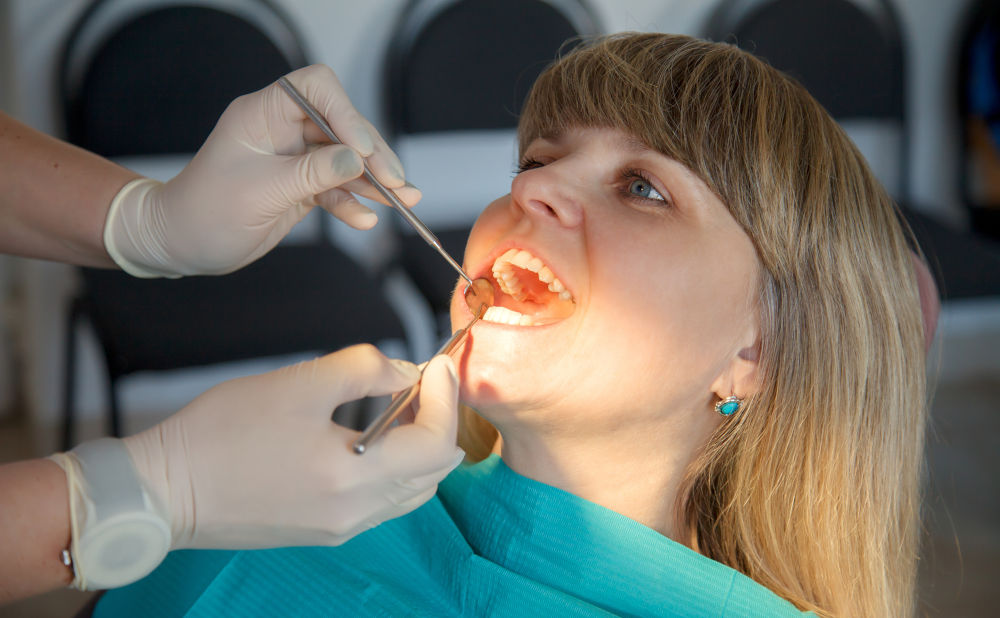
What Does an Oral Cancer Sore Look Like?
An oral cancer sore does not have one standard appearance. This is what makes online image comparisons unreliable.
Some lesions look like ulcers. Some look like patches. Some look like a lump. Some look like tissue that has become thick, rough, or slightly raised. An oral cancer ulcer may be red, white, or a mix of both.
Possible signs include:
- A white patch that does not wipe away
- A red patch that does not heal
- A mixed red-and-white lesion
- A sore that stays open
- A lump on the tongue, gum, cheek, or lip
- Thickened or rough tissue
- A crusted lip sore that keeps returning
- Bleeding without clear injury
- Numbness near the sore
A mouth cancer mouth ulcer may look like a regular ulcer at first. The difference is that a regular ulcer should repair itself. A suspicious lesion stays too long.
Some patients use the phrase cancer sore when they are worried about a mouth lesion. That phrase is understandable, but it is not a diagnosis. Dentists evaluate the actual tissue change: ulcer, patch, lump, thickening, bleeding, or discoloration.
A small oral cancer sore may not cause much pain. This is one of the most important things to remember. Painless does not always mean harmless.
Can Oral Cancer Be Mistaken for a Mouth Ulcer?
Yes. Oral cancer can be mistaken for a mouth ulcer, especially in the early stage.
It makes sense. Mouth ulcers are common. People bite their cheek, burn the roof of the mouth, scrape the gum, or get a painful spot during stress. Most of these heal without much drama.
The problem comes when a sore is treated mentally as “just an ulcer” for too long.
| Why Patients Confuse Them | Why the Difference Matters |
|---|---|
| Both can appear as open sores | Oral cancer may not heal |
| Both can be red around the edges | Cancer may also have white or mixed patches |
| Both can occur after irritation | Cancer does not resolve like trauma |
| Both can be uncomfortable | Cancer may also be painless |
| Both can appear small | Size alone does not rule out risk |
The difference between mouth ulcer and cancer often becomes clearer with time. A canker sore moves through healing. A suspicious oral cancer ulcer lingers.
If you are comparing mouth ulcer vs mouth cancer because the sore has stayed longer than expected, schedule an exam. You do not need to know what it is before seeing the dentist. That is the dentist’s job.
Tongue Cancer vs Canker Sore
The tongue is one area where waiting too long is not a good idea.
A canker sore can appear on the tongue. So can a bite injury or irritation from a sharp tooth. A sore tongue does not automatically mean cancer.
Still, tongue cancer vs canker sore questions deserve a careful answer because the side of the tongue and the underside of the tongue are important oral cancer screening areas.
A tongue canker sore is usually painful and temporary. It may sting when talking, eating, or brushing. It should improve within days and heal within the usual one-to-two-week window.
A more concerning tongue lesion may:
- Last longer than two weeks
- Appear on the side of the tongue
- Appear under the tongue
- Feel firm or thick
- Bleed without clear injury
- Cause numbness
- Make tongue movement uncomfortable
- Look red, white, mixed-color, or raised
Patients sometimes search oral cancer canker sore because the lesion looks like a canker sore but does not act like one. That is exactly when it needs to be checked.
A sore on the tongue that is clearly healing is less concerning. A sore on the tongue that stays, hardens, or keeps returning in the same place should be evaluated.
Risk Factors for Oral Cancer
Risk factors do not mean a mouth sore is cancer. They mean the threshold for getting checked should be lower.
Florida patients have a few practical reasons to be aware of oral cancer risk. The state has a large older adult population. Many people spend a lot of time in the sun, which matters for lip cancer risk. Tobacco, alcohol, HPV exposure, and age also play a role.
Tobacco Use
Tobacco is one of the best-known oral cancer risks. This includes cigarettes, cigars, pipes, and smokeless tobacco.
Smokeless tobacco is especially harmful to the tissues where it sits. It can affect the gums, cheeks, and inner lip area. If a person who uses tobacco notices mouth cancer sores, white patches, red patches, or a sore that does not heal, it should be examined.
Heavy Alcohol Use
Heavy alcohol use can increase oral cancer risk. The risk is higher when alcohol and tobacco are both part of the picture.
This does not mean every person who drinks has a high-risk sore. It means persistent sores should not be dismissed, especially with other risk factors.
HPV Infection
Certain types of HPV are linked with cancers in the back of the throat, tonsil area, and base of tongue. These are sometimes called oropharyngeal cancers.
They may not always begin as an obvious sore in the front of the mouth. A dentist or physician may be needed if there are symptoms such as a persistent throat sensation, trouble swallowing, or a neck lump.
Age
Oral cancer risk increases with age. Older adults should be especially careful with any mouth ulcer vs cancer concern that lasts more than two weeks.
Sun Exposure
The lips are exposed to ultraviolet light. In Florida, that matters. A non-healing lip sore, crusted patch, or recurring bleeding spot should be checked, especially in people who spend a lot of time outdoors.
Previous Cancer History
A previous cancer history can affect how closely a patient should be monitored. Tell your dentist about past cancers, radiation treatment, biopsies, or recurring oral lesions.
Screening Checklist
Regular oral cancer screenings are especially important if you:
- Use or used tobacco
- Drink heavily
- Have HPV-related risk factors
- Are over 40
- Spend a lot of time outdoors
- Have had oral, throat, or other related cancers
- Notice red or white patches
- Have a sore that keeps returning in one place
- Have unexplained bleeding
- Feel a lump in the neck
- Have a persistent sore under or on the side of the tongue
Risk does not equal diagnosis. It simply means persistent symptoms deserve less waiting.
When Should You See a Dentist?
See a dentist if a sore lasts more than two weeks.
That is the main answer. It applies whether you are worried about canker sore vs cancer, mouth cancer vs canker sore, or the difference between mouth ulcer and cancer.
You should also be seen sooner if the sore is changing quickly or appears with other symptoms.
| Symptom | Why It Matters |
|---|---|
| Sore lasting over 2 weeks | Not typical for a simple canker sore |
| Trouble swallowing | May involve deeper tissues |
| Persistent pain | Needs a clear diagnosis |
| Lump in the neck | Can be related to infection or cancer |
| Bleeding | Concerning if unexplained |
| Numbness | Should be evaluated |
| Loose teeth | Concerning without a clear dental cause |
| Red or white patch | May need monitoring or biopsy |
| Firm or thick tissue | More concerning than a soft ulcer |
A mouth cancer sore may not hurt, so do not use pain as the deciding factor.
More urgent warning signs
Seek urgent dental or medical care if you have rapid swelling, trouble breathing, trouble swallowing saliva, heavy bleeding, severe pain with fever, sudden numbness, or a fast-growing lump.
These symptoms are not typical of an ordinary canker sore.
How Dentists Diagnose Oral Cancer
The first step is an exam. A dentist looks at the sore and the surrounding tissue. They also check the tongue, gums, inner cheeks, lips, roof of the mouth, floor of the mouth, throat area, and neck.
The dentist may ask when the sore appeared, whether it has changed, whether it bleeds, whether it hurts, and whether you use tobacco or alcohol. They may ask about HPV history, previous cancer, dentures, sharp teeth, or recent dental work.
Then they examine the tissue. A suspicious area may be photographed, measured, monitored for a short period, or referred for further evaluation.
Possible diagnostic steps include:
| Step | Purpose |
|---|---|
| Oral exam | Checks visible tissue changes |
| Oral cancer screening | Looks at common high-risk areas |
| Follow-up monitoring | Sees whether the lesion heals |
| Imaging | Assesses deeper structures if needed |
| Biopsy | Tests tissue in a lab |
A biopsy is the only way to confirm whether a lesion is cancerous. Needing a biopsy does not mean a patient definitely has cancer. It means the sore or patch needs a clear answer.
How to Reduce Your Risk of Oral Cancer
Not every risk can be removed, but several can be reduced.
Avoid tobacco. This includes cigarettes, cigars, pipes, and smokeless tobacco. If quitting feels difficult, ask a healthcare provider for help rather than trying to manage it alone.
Limit alcohol, especially heavy drinking. The combination of alcohol and tobacco is especially risky for oral tissues.
Protect your lips from the sun. In Florida, SPF lip balm is not just cosmetic. It is practical prevention. A hat can help too.
Talk with a healthcare provider about HPV vaccination when appropriate. HPV vaccination can reduce the risk of HPV-related cancers.
Keep dental visits consistent. Oral cancer screenings are quick, but they matter. They give the dentist a chance to notice changes in places that are hard to see at home.
At home, look for sores that do not heal, red or white patches, lumps, thickened tissue, bleeding, numbness, and changes on the tongue or lips. Do not scrape or repeatedly touch a sore to “test” it. That only adds irritation.
Schedule an Oral Cancer Screening
If you have a mouth sore, ulcer, patch, lump, or gum change that has lasted longer than two weeks, schedule a dental examination.
Dental Team FL provides comprehensive oral exams and oral cancer screenings at multiple Florida locations. During the visit, the dentist can check the tongue, gums, lips, cheeks, floor of the mouth, roof of the mouth, and other soft tissues.
Most mouth sores are harmless. The important thing is knowing when not to wait.