


Plain Answer First
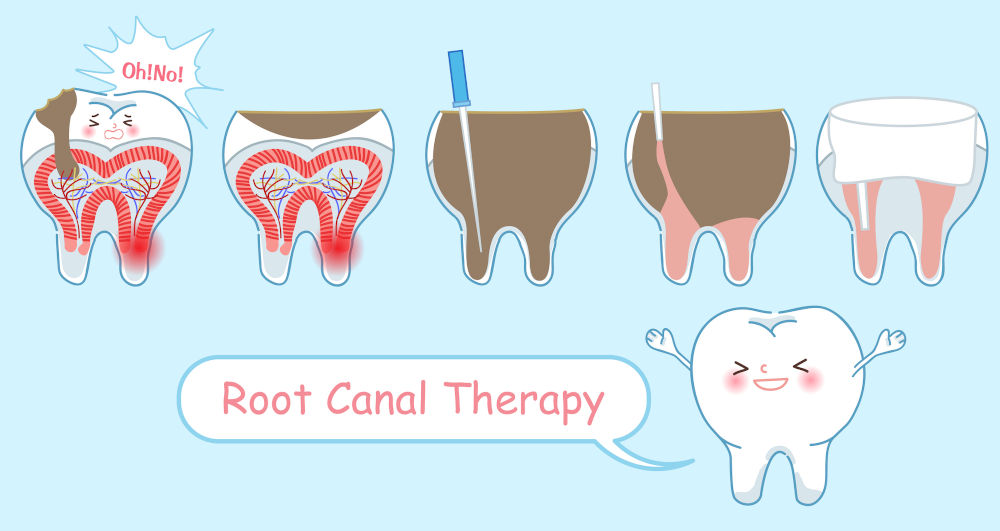
A root canal is a way to save a tooth when the nerve tissue inside it has become infected, inflamed, or damaged. The dentist cleans out the unhealthy tissue from inside the tooth, disinfects the narrow spaces in the roots, seals them, and then restores the tooth so it can continue to function.
The tooth is not removed. That is one of the biggest misunderstandings.
Most people are not afraid of the technical part of a root canal. They are afraid it will hurt. In many cases, the tooth is already hurting because the nerve is irritated or infected. The purpose of the root canal procedure is to get rid of that source of pain, not create more of it.
A modern root canal is usually done with local anesthesia. Patients may feel pressure, vibration, water, or jaw tiredness. Sharp pain should not be part of the plan. If the tooth is very inflamed, it may take more time to numb properly, and that should be handled before the treatment continues.
Root canal treatment is often recommended when a tooth can still be saved but a filling alone is no longer enough.
What This Article Covers
- What a root canal actually is
- Why the inside of a tooth can become infected
- Signs a tooth may need root canal treatment
- What happens during the appointment
- Whether the procedure hurts
- Recovery and aftercare
- Why a crown is often needed afterward
- Root canal cost factors
- What can happen if treatment is delayed
Key Takeaways
A root canal treats the inside of a tooth, not the outside surface.
It is used when the pulp inside the tooth is infected, inflamed, or no longer healthy.
The aim is to save the natural tooth and avoid extraction when saving it is realistic.
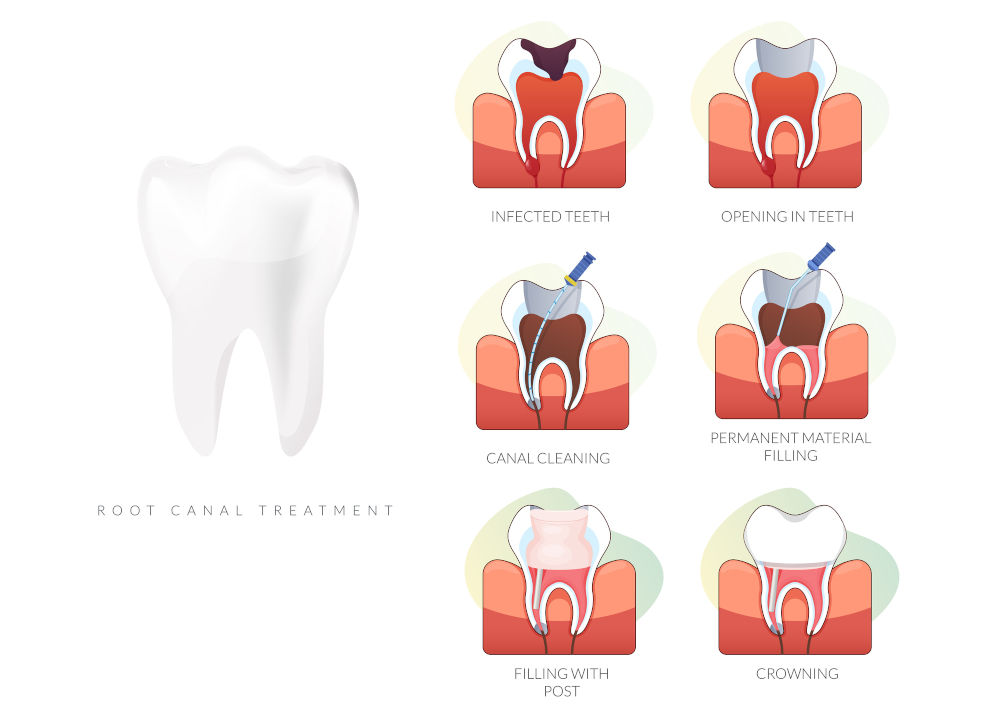
The procedure usually involves numbing the tooth, opening it, removing damaged pulp, cleaning the canals, sealing them, and restoring the tooth.
A root canal and crown often go together, especially for back teeth.
Root canal cost depends on the tooth, complexity, insurance, and whether a crown is needed.
Waiting too long can turn a treatable tooth into a tooth that cannot be saved.
What Is a Root Canal?
A root canal is a dental treatment for the inside of the tooth.
To understand it, it helps to picture the tooth in layers. The outside is hard enamel. Beneath that is dentin. Inside the centre of the tooth is soft tissue called pulp. This pulp contains nerves, small blood vessels, and connective tissue.
When the tooth is healthy, you do not notice the pulp at all. When it becomes inflamed or infected, you may feel deep pain, lingering sensitivity, pressure, swelling, or pain when biting.
So, what is a root canal in normal language?
It is the treatment used when the damage has gone too deep for a regular filling. The dentist removes the infected or inflamed pulp, cleans the small canals inside the roots, and seals the tooth from the inside.
The name sounds more complicated than the treatment idea. “Root canal” refers to the small natural channels inside the roots of the tooth. The dentist is not creating a canal. The canal is already there. The treatment cleans and fills it.
Root canal therapy is often the step between “this tooth can be repaired” and “this tooth has to come out.” If there is enough healthy structure left, saving the tooth is usually worth discussing.
Natural teeth are not just white objects in a smile. They hold space. They help with chewing. They keep the bite stable. Their roots help support the bone. When a tooth is removed, those things have to be replaced or managed in some other way.
That is why dentists often recommend root canal treatment when the tooth can still be restored.
Why the Inside of a Tooth Gets Into Trouble
A tooth usually needs a root canal because bacteria or injury has reached the pulp.
This does not always happen overnight. A tooth can look mostly normal from the outside while something deeper is already going wrong.
Common causes include deep decay, cracked teeth, old leaking fillings, trauma, and repeated dental work on the same tooth.
A small cavity can be treated with a filling. A deeper cavity may get close to the nerve. Once bacteria reach the pulp, the body cannot clean that space the way it might heal a small cut on the skin. The inside of a tooth is closed off and narrow. Infection can build pressure.
Cracks are another common reason. Some cracks are easy to see. Others are not. A patient may say, “It only hurts when I bite in one exact spot.” That can be a clue that a crack is flexing under pressure.
Old fillings and crowns can also fail around the edges. Bacteria can get underneath. The patient may not see a hole, but decay may still be active under the restoration.
Trauma is different. A fall, accident, sports injury, or hit to the mouth can damage the pulp even if the tooth does not break. Sometimes the tooth darkens months later. Sometimes it becomes painful much later, which makes the connection less obvious.
Repeated dental work can also irritate a tooth. A tooth with several large fillings over the years may eventually stop tolerating more repair.
Signs You May Need a Root Canal
A tooth that needs root canal treatment can behave in different ways.
Sometimes the pain is obvious. It throbs. It wakes you up. It reacts to heat. It hurts to chew.
Other times, the signs are quieter. A gum bump appears. A tooth changes color. A bad taste comes and goes. A patient may only notice that one tooth feels “different.”
Symptoms Dentists Often Look For
A possible tooth that needs root canal treatment may cause:
- toothache that keeps returning
- pain when chewing or biting
- sensitivity to hot or cold that lingers
- pain that wakes you at night
- swelling near the gum
- a small bump on the gum near the tooth
- bad taste or drainage
- darkening of one tooth
- tenderness around the jaw
- pain after a deep filling
- pain from a cracked or broken tooth
- pressure around one specific tooth
Not every sensitive tooth needs root canal therapy. Sensitivity can come from gum recession, enamel wear, grinding, whitening products, sinus pressure, or a small cavity.
The warning sign is lingering pain.
If cold water hurts for one second and then stops, that can be simple sensitivity. If cold or heat causes pain that hangs around, the nerve may be irritated. If biting hurts sharply, especially on release, a crack may be involved. If swelling appears, infection has probably moved beyond simple sensitivity.
One awkward thing about dental infection is that pain can disappear for the wrong reason. If the nerve dies, the tooth may stop hurting for a while. That does not mean the problem has healed. Infection can still remain around the root.
What Happens During a Root Canal Procedure?
People often imagine a root canal as one big painful event. In reality, it is a sequence of small steps. The dentist is working inside a very small space, so the appointment can feel slow and detailed rather than dramatic.
The exact process can vary. A front tooth is usually simpler. A molar root canal often takes longer because molars can have several canals. Some teeth are finished in one visit. Others need more than one appointment.
Here is the usual flow.
The Tooth Is Numbed First
The dentist numbs the tooth and surrounding gum with local anesthesia.
This part matters. A root canal should not begin properly until the area is numb. If the tooth is very inflamed, numbing can take longer. That is not unusual, and it does not mean the patient has to tolerate pain. It means the dentist may need to wait, test the tooth, or use more anesthetic.
Once the area is numb, the patient may still feel pressure or vibration. That is normal. Pressure is not the same as sharp pain.
A Small Opening Is Made
The dentist creates a small opening in the tooth to reach the pulp chamber.
For back teeth, this is usually through the chewing surface. For some front teeth, the access may be from the back of the tooth.
The opening lets the dentist reach the infected or inflamed tissue inside.
The Damaged Pulp Is Removed
The unhealthy pulp is removed from the tooth.
This is the central part of root canal treatment. The dentist is not removing the whole tooth. The outer tooth remains in place. The infected or inflamed tissue inside is taken out.
This is also why many patients begin to feel better after treatment. The pressure and inflamed nerve tissue are being addressed.
The Canals Are Cleaned
The canals inside the roots are cleaned, shaped, and disinfected.
This part takes patience. Root canals are narrow. Some are curved. Molars can have several canals, and they are not always identical from patient to patient.
The dentist uses small instruments and disinfecting solutions to clean the canal system as thoroughly as possible.
This is the practical answer to “how is a root canal done.” It is careful internal cleaning, not simply drilling a hole and filling it.
The Canals Are Sealed
After cleaning, the canals are filled with a sealing material. This helps close the cleaned space and reduce the risk of bacteria getting back inside.
The tooth is then closed with a temporary or permanent filling, depending on the next step.
The Tooth Is Restored
The tooth still needs strength.
A front tooth with enough healthy structure may only need a filling. A back tooth often needs a crown, especially if it had a large cavity, crack, or old filling.
The root canal procedure deals with the infection inside the tooth. The restoration deals with chewing force. Both parts matter.
Does a Root Canal Hurt?
This is the question most patients care about.
A properly numbed root canal should not feel like sharp pain. Patients often feel pressure, vibration, water, or jaw fatigue. Some dislike the sounds. Some dislike keeping their mouth open. Some are anxious because they have heard bad stories.
But the old reputation of root canals is not a fair picture of modern treatment.
The infected tooth is often far more painful than the procedure. A patient may arrive with throbbing pain, swelling, or sensitivity that has made eating and sleeping difficult. The root canal is meant to remove the source of that pain.
That does not mean the appointment is pleasant. Dental treatment rarely feels enjoyable. The injection can pinch. The jaw can get tired. The tooth may be sore afterward.
But there is a big difference between discomfort and uncontrolled pain.
If you are anxious, say it clearly before treatment starts. Some patients need a slower explanation. Some need breaks. Some may be candidates for sedation options, depending on the case and medical history.
A good root canal appointment should feel controlled, not rushed.
Root Canal Recovery: What Is Normal?
Root canal recovery is often easier than people expect, but the tooth may not feel normal immediately.
The tissues around the root can be inflamed before treatment. The dentist has also worked inside the tooth. Tenderness for a few days is common.
A rough recovery pattern looks like this:
| Time After Treatment | What Many Patients Notice |
|---|---|
| Same day | Numbness wears off, mild soreness may begin |
| First few days | Tooth may feel tender when chewing |
| Days 3 to 7 | Discomfort usually starts settling |
| After final restoration | Tooth feels more stable for normal chewing |
| Longer term | Bone around a previously infected root continues healing |
Some patients feel better quickly. Others need more time, especially if there was an abscess or strong inflammation before treatment.
Simple Recovery Advice
Chew on the other side until the tooth is restored.
Avoid hard foods if there is a temporary filling.
Do not skip the final crown or restoration if it was recommended.
Take medication only as directed.
Keep brushing and flossing, but be gentle around the area.
Call the office if swelling develops, the bite feels too high, or pain gets worse instead of better.
A treated tooth may feel slightly odd for a short time. That alone is not unusual. Worsening pain, swelling, fever, or a bad bite should be checked.
Root Canal vs Tooth Extraction
When a tooth hurts badly, it is tempting to say, “Just pull it.”
Sometimes that is the right answer. Some teeth are too cracked, too broken, too loose, or too damaged to save.
But if the tooth can be saved well, root canal treatment often has advantages.
| Root Canal | Tooth Extraction |
|---|---|
| Keeps the natural tooth | Removes the tooth |
| Treats the infected pulp | Removes the whole tooth |
| Usually needs a filling or crown | May need an implant, bridge, or denture later |
| Helps maintain chewing function | Leaves a gap unless replaced |
| Helps keep nearby teeth in position | Nearby teeth can shift into the space |
| Can preserve the natural bite | Bite changes may occur if the tooth is not replaced |
Extraction can look simpler at first. It may also seem cheaper at the first appointment. But the missing tooth may need to be replaced later. That replacement has its own cost, time, and maintenance.
A root canal is not always the better choice. Extraction is not always the worse choice. The right decision depends on whether the tooth is restorable.
That means looking at the amount of healthy tooth left, the root condition, gum support, cracks, infection, and the patient’s long-term plan.
Will You Need a Crown After a Root Canal?
Many back teeth need a crown after a root canal.
This is not because the root canal itself makes the tooth useless. It is because teeth that need root canals are often already weakened by decay, large fillings, cracks, or missing structure.
Molars and premolars take heavy chewing pressure. After root canal treatment, a crown helps hold the tooth together and reduce the chance of fracture.
Think of it this way:
The root canal cleans the inside.
The crown protects the outside.
A root canal and crown are often planned together for back teeth. If the crown is delayed too long, the tooth may crack before it is protected.
Front teeth are different. They do not take the same chewing force as molars. Some front teeth can be restored with a filling after root canal therapy, especially if the remaining structure is strong. Others may need a crown for strength or appearance.
The dentist should explain why a crown is or is not recommended in your specific case.
How Much Does a Root Canal Cost?
Root canal cost varies because the treatment is not the same for every tooth.
A front tooth is usually simpler. It often has fewer canals. A molar root canal is usually more involved because molars can have several canals and more complex root shapes.
The cost can also change depending on infection, previous dental work, tooth condition, insurance coverage, and whether a crown is needed afterward.
Common cost factors include:
- front tooth, premolar, or molar
- number of canals
- infection level
- old fillings or crowns
- cracks or broken tooth structure
- need for a crown
- insurance coverage
- whether emergency care is needed
- whether specialist treatment is required
Patients often search for “how much does a root canal cost” or “root canal cost without insurance” because they are trying to decide what they can manage financially.
That is understandable. Tooth pain often appears at the worst time.
But it is important to compare the full picture. Extraction may cost less upfront, but replacing the tooth later with an implant, bridge, or denture can change the total cost. Saving the tooth may be more practical long term if the tooth is strong enough to restore.
A proper estimate should separate the root canal procedure from the crown or final restoration. Patients should know what is included, what is separate, and what insurance may cover.
Exact pricing should come after an exam and X-rays, not from a general article.
What Happens if You Delay a Root Canal?
Delaying a root canal can make the situation harder to treat.
The pain may come and go. That does not mean the tooth has healed. Dental infection can quiet down and then flare again. Sometimes it returns worse.
Possible problems include:
- stronger toothache
- swelling in the gum or face
- abscess
- infection spreading into surrounding tissue
- bone loss around the root
- damage to nearby teeth
- tooth fracture
- emergency treatment
- losing the tooth
Many people delay because they are scared. Many delay because of cost. Both reasons are real.
Still, waiting usually does not make the tooth easier or cheaper to fix. A tooth that might have been saved earlier can become too broken or infected to restore later.
Severe pain, swelling, fever, facial puffiness, or a bad taste near the tooth should not be ignored.
Myth vs Fact
| Myth | Fact |
|---|---|
| A root canal removes the tooth. | The tooth stays in place. The damaged pulp inside is removed. |
| Root canals are always painful. | Modern treatment is done with local anesthesia. The infected tooth is often the painful part. |
| If the pain stops, the tooth is fine. | A dying nerve can stop hurting while infection remains. |
| Antibiotics can replace a root canal. | Antibiotics may calm spreading infection, but they do not clean the inside of the tooth. |
| A crown is only cosmetic. | On many back teeth, a crown protects the tooth from breaking. |
| Extraction is always cheaper. | Extraction may cost less first, but replacing the missing tooth can cost more later. |
Dental Team FL Perspective
Root canal fear is common. A lot of patients wait because they expect the procedure to be worse than the toothache. In many cases, the opposite is true: the infected tooth is the painful part, and treatment is what finally gives the area a chance to settle.
Dental Team FL evaluates tooth pain, dental infections, root canal needs, crowns, and emergency dental concerns across its Florida locations. Some patients need urgent care because of swelling or severe pain. Others need X-rays, a clear diagnosis, and a realistic plan before the tooth becomes harder to save.